
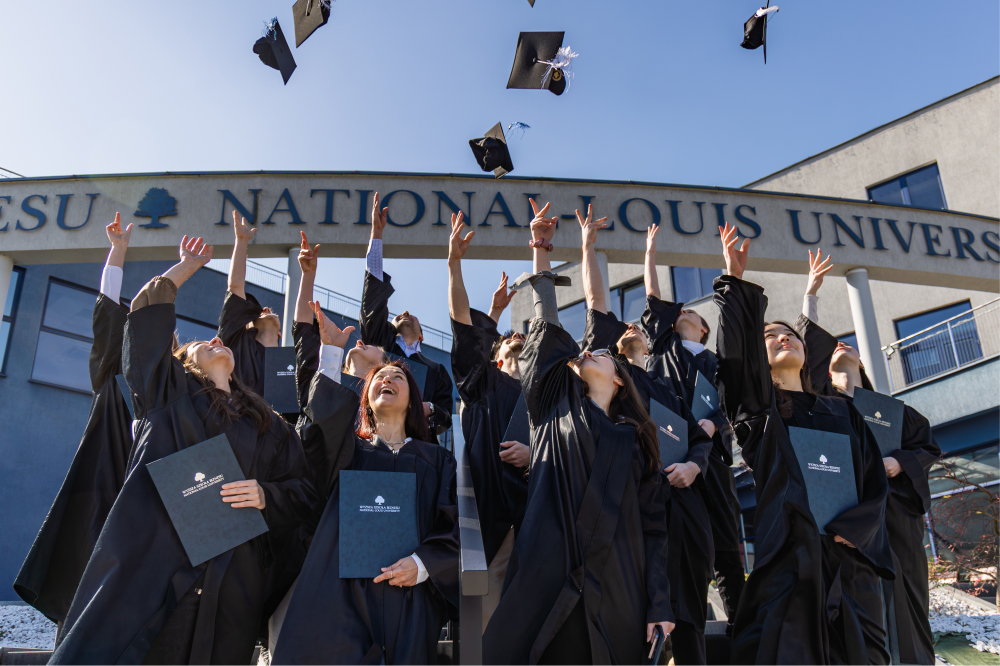
Innovation in higher education is often associated with large cities, established academic hubs and extensive networks. The story of Nowy Sącz School of Business – National Louis University (WSB-NLU) offers a different perspective: a university can be rooted in a smaller regional setting and still develop international reach, practical relevance and meaningful societal connections.
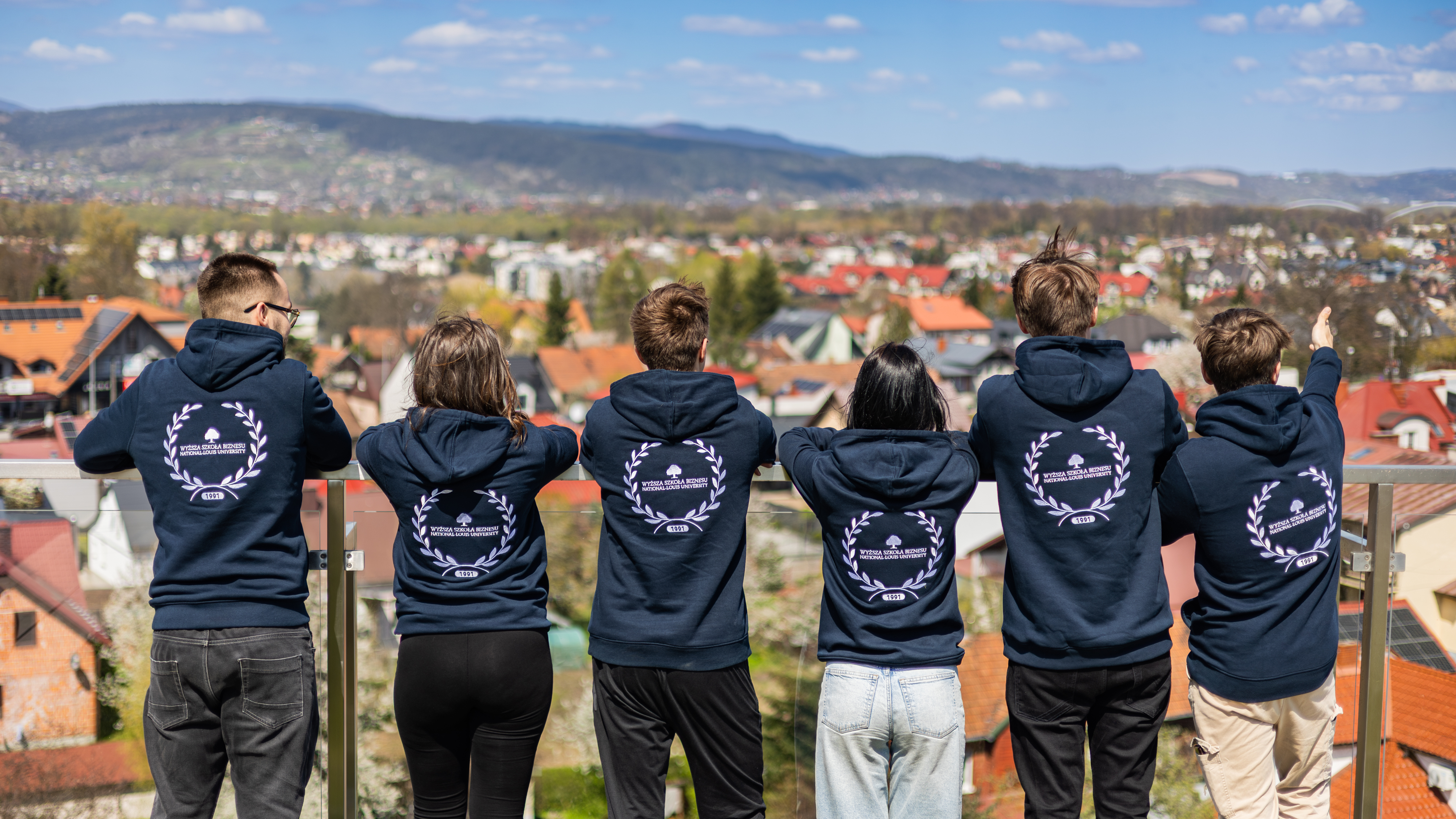
Located in southern Poland, WSB-NLU was established in the early 1990s, during a period of profound political and economic transformation. From the outset, it chose a practice-oriented and internationally connected model, shaped in part through cooperation with National Louis University in Chicago. The university adopted educational approaches focused on international compatibility and learner progression at a time when these were not yet widely embedded in Polish higher education.
Yet the more interesting aspect of its story is not its history alone. It is the way the institution has turned its location into an organising idea: rather than accepting distance from major academic centres as a limitation, it has used international cooperation, digital infrastructure and external partnerships to expand what a regionally based university can contribute.
A regional institution with an outward-looking role
Nowy Sącz is not one of Poland’s dominant academic centres. This creates challenges: fewer immediate networks, less visibility and stronger competition for learners and partners. But it also creates a reason to be distinctive.
WSB-NLU developed connections across Central and Eastern Europe, drawing on its proximity to neighbouring countries such as Slovakia and Hungary. Its offer for international learners, including programmes delivered in national languages, helped create a more cross-border academic environment. In this sense, the university’s location became a point of connection rather than isolation.
This matters because a university’s impact is not measured only by how far its reputation travels. It is also reflected in the way it responds to its environment and creates opportunities for those within and beyond its region.
Here, the WSB-NLU story connects to the ACEEU standard of Institutional Commitment. An entrepreneurial or engaged university is shaped by a clear institutional direction: a willingness to organise education, partnerships and development around real opportunities and needs. In WSB-NLU’s case, international openness and practical relevance have not been occasional additions, but recurring features of its development.
Digitalisation as a way to widen participation
A second defining feature of WSB-NLU’s approach is its early investment in digital infrastructure. Before online education became an urgent necessity, the university developed CloudA, its own platform supporting learning, communication, administration and educational monitoring.
The value of this investment became particularly visible during the COVID-19 pandemic, when institutions everywhere needed to shift rapidly to digital delivery. For WSB-NLU, an established system provided a stronger foundation for maintaining teaching and communication.
More importantly, digitalisation supports the university’s broader role today. Flexible and hybrid learning opportunities matter for students and professionals who combine education with work and other responsibilities. Technology, in this context, is not merely an operational tool; it contributes to accessibility and to a more responsive learning environment.
This is a useful lesson for universities seeking to strengthen their impact. Digital transformation becomes meaningful when it is tied to purpose: widening access, supporting learners and enabling institutions to cooperate more effectively with their surroundings.
From practical education to wider engagement
WSB-NLU’s focus on practice also links its educational work with the world outside the university. Cooperation with companies, public institutions and non-governmental organisations creates opportunities for internships, applied learning and projects connected to real challenges.
This interaction is central to the role of contemporary universities. Teaching and research remain essential, but universities are increasingly expected to contribute to the development of their regions and communities through knowledge exchange, collaboration and engagement.
This dimension of the WSB-NLU story relates to a second ACEEU standard: Influence within the Ecosystem. What matters is not simply whether partnerships exist, but whether the institution uses them to support learners, external organisations and the wider environment in meaningful ways.
For a university located outside a metropolitan hub, this form of engagement can be particularly significant. It allows the institution to act as a connector: linking international perspectives with regional realities, digital capacity with accessibility, and academic learning with professional and societal needs.
Impact is not a postcode
There is an attractive simplicity to the WSB-NLU story. It does not suggest that location is irrelevant, or that digital platforms and partnerships automatically create impact. Rather, it shows how a university can make deliberate choices in response to its context.
A regional location can encourage international outreach. Distance can accelerate digital innovation. The need to remain relevant can lead to stronger connections with employers, communities and learners.
At a time when higher education institutions are confronting digital transformation, changing labour markets and growing expectations of societal contribution, this experience is valuable. Impact does not belong only to large universities in highly visible innovation centres. It can also emerge from institutions that understand their particular context and turn it into a source of purpose.
From Nowy Sącz, WSB-NLU demonstrates that being outside the centre does not mean operating at the margins. With a clear outward-looking orientation and meaningful engagement, local roots can become the foundation for wider impact.
https://www.wsb-nlu.edu.pl/en

The WBS-NLU Team
https://www.wsb-nlu.edu.pl/en