
As higher education institutions worldwide confront the transformative forces of artificial intelligence, sustainability imperatives, and accelerating industrial change, the role of universities is undergoing a fundamental shift. Traditionally, universities have focused on two core missions: teaching and research. Today, however, society increasingly expects universities to play a broader role as catalysts for innovation, economic development, and social progress.
This evolving responsibility lies at the heart of the university’s Third Mission.
At Chung Yuan Christian University (CYCU), we believe that universities should not only generate knowledge but also actively build the ecosystems that enable knowledge to create meaningful impact. This conviction has guided our efforts to integrate education, research, entrepreneurship, industry collaboration, and community engagement into a comprehensive innovation ecosystem that extends far beyond the boundaries of the campus. Seen through the lens of ACEEU’s Education Standard, this means treating entrepreneurship as an opportunity for students across disciplines to develop entrepreneurial knowledge, skills and the capacity to act.
Over the past decade, CYCU has systematically developed an entrepreneurial ecosystem that empowers students, researchers, startups, industry partners, and public-sector stakeholders to collaborate in addressing real-world challenges. Through interdisciplinary entrepreneurship education, startup incubation, technology commercialization, industry partnerships, and international engagement, we have cultivated more than 320 entrepreneurial teams, supported the creation of over 34 university spin-offs, and maintained a 15-year record of mentoring student teams that successfully secured Taiwan’s Ministry of Education U-start Entrepreneurship Program funding.
Yet, we have learned that the true value of entrepreneurship education is not measured solely by the number of startups created. More importantly, it is reflected in the ability of students to develop resilience, creativity, and the capacity to solve complex problems in uncertain environments. This broader understanding is central to entrepreneurial education in which graduates can act entrepreneurially and intrapreneurially across a wide range of professional and societal contexts.
This realization has shaped CYCU’s educational philosophy. Rather than treating entrepreneurship as a stand-alone activity, we embed innovation and problem-solving across the student learning journey. Students are encouraged to work on authentic industry challenges, collaborate across disciplines, and transform ideas into practical solutions that create social and economic value.
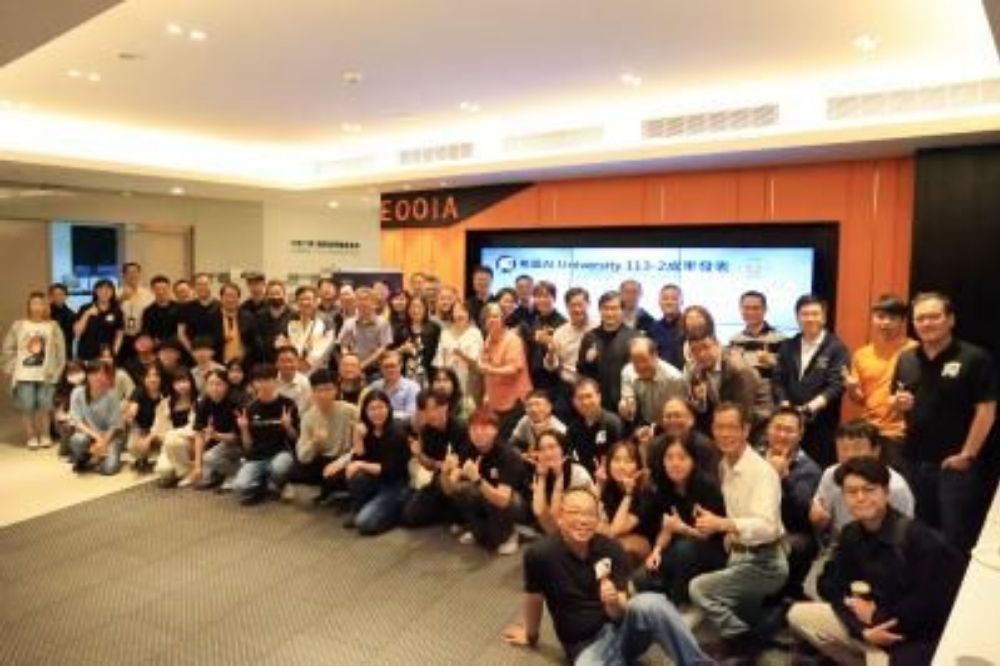
One of the most significant outcomes of this approach is the launch of the AI University Industry Co-Creation Program in 2025. Developed in partnership with industry and local government, the initiative addresses a growing challenge faced by many economies: the widening gap between AI talent development and industrial transformation.
Under this model, companies present real operational challenges and innovation needs, while multidisciplinary student teams collaborate with industry mentors to develop AI-driven solutions using large language models (LLMs) and generative AI technologies. Students are no longer passive recipients of knowledge; they become co-creators of innovation. Likewise, companies are no longer merely employers; they become active partners in the educational process. This closely reflects ACEEU’s understanding of education as a collaborative process in which external stakeholders contribute to practice-based learning, while students apply their capabilities in authentic contexts.
The program represents a new paradigm for university-industry collaboration—one that transforms education into a platform for shared value creation.
Beyond talent development, CYCU has also focused on strengthening regional and national innovation ecosystems through its Industry Accelerator and Incubation Center. Over the years, the center has supported more than 350 startups, facilitated over NT$5 billion in funding and government-supported innovation resources, and contributed to the growth of nine companies that successfully entered public capital markets.
In 2024, these efforts received international recognition when CYCU became the first university-affiliated incubator in Taiwan to receive the Startup Ecosystem Stars Award from the International Chamber of Commerce (ICC), in partnership with the OECD, the European Commission, and Mind the Bridge. This recognition affirmed our belief that universities should not merely participate in innovation ecosystems—they should help shape and lead them.
Looking ahead, CYCU will continue to deepen the integration of artificial intelligence, sustainability, and entrepreneurship. Through initiatives such as AI University, international innovation partnerships, and next-generation entrepreneurial education programs, we aim to create an open innovation platform where students, faculty, industry, government, and society can collaboratively address future challenges.
In the AI era, the Third Mission of universities is no longer simply about transferring knowledge. It is about co-creating the future.
And that is the future that Chung Yuan Christian University is committed to building, one which generates educational, entrepreneurial and ecosystem-level outcomes, reflecting ACEEU’s emphasis on demonstrating the wider impact created by entrepreneurial universities.
-

-
-