
By People for People
Everything is about people. Universities, companies, and government bodies are, in the end, (fortunately and unfortunately) represented by concrete persons. Individuals whose capabilities, intelligence (especially emotional intelligence), willingness, proactivity, and many other aspects of their personalities are often the key and decisive components of all future collaborative outcomes, for instance, research projects.
In today’s global (fast, competitive, changing-all-the-time) environment, cooperation with the right group of professionals is essential to succeed, or better say: survive. And both succeeding and surviving are much easier and more comfortable with people you know and can rely on. Long-term collaboration between regions is built over many years, through various activities, and with multiple individual partners. Together, these long-term, trust-based collaborations show how institutional commitment to engagement becomes tangible in everyday research practice, when universities embed collaboration and partnership-building into their strategic priorities, reflecting ACEEU’s standards on Institutional Commitment and Research.
Proactivity and Humanity over Knowledge and Structure
Let us state it very clearly right at the beginning: knowledge and structure are essential for working in a transnational team focused on research. Supposing that these are characteristics that most higher education institutions already possess – organised knowledge and established processes – others, such as proactivity and humanity, can elevate the outcomes on different levels. If you think of it as a dessert, knowledge and processes are the ice cream everyone has, whereas proactivity and humanity are the cherry on top, which makes the difference.
That is what you need to get. A bunch of people who know what they are doing, why it matters, and on top are willing to do it with a smile on their face. Because voluntary cooperation works only if those involved see clear benefits – whether personal, professional, or the satisfaction of contributing to something meaningful. And since transnational collaboration in the sense of a research environment is not primarily about making money, there has to be something more. This can include knowledge exchange (sharing expertise across borders), developing skills and infrastructure, building long-term relationships through joint initiatives, or conducting research that addresses global challenges.
Collaboration as a Team Sport
The Research Support Office (RSO), comprising the heads of grant office departments and other professionals from the Euroleague for Life Sciences (ELLS) network, was established around 2013. Since then, we have developed several successful initiatives that demonstrate the power of transnational cooperation. The RSO aims to support research and research funding by providing information and consulting on national and European funding opportunities, strengthening cooperation among ELLS support offices, enhancing the quality of research support, and serving as a platform for exchanging experiences and forming project partnerships among researchers from ELLS universities. For leaders and managers in higher education, RSO shows how internal support structures can be strategically aligned with research goals, reflecting ACEEU’s standards on Institutional Commitment, Internal Support Structures and Research, while fostering a collaborative culture that enables sustained transnational engagement.
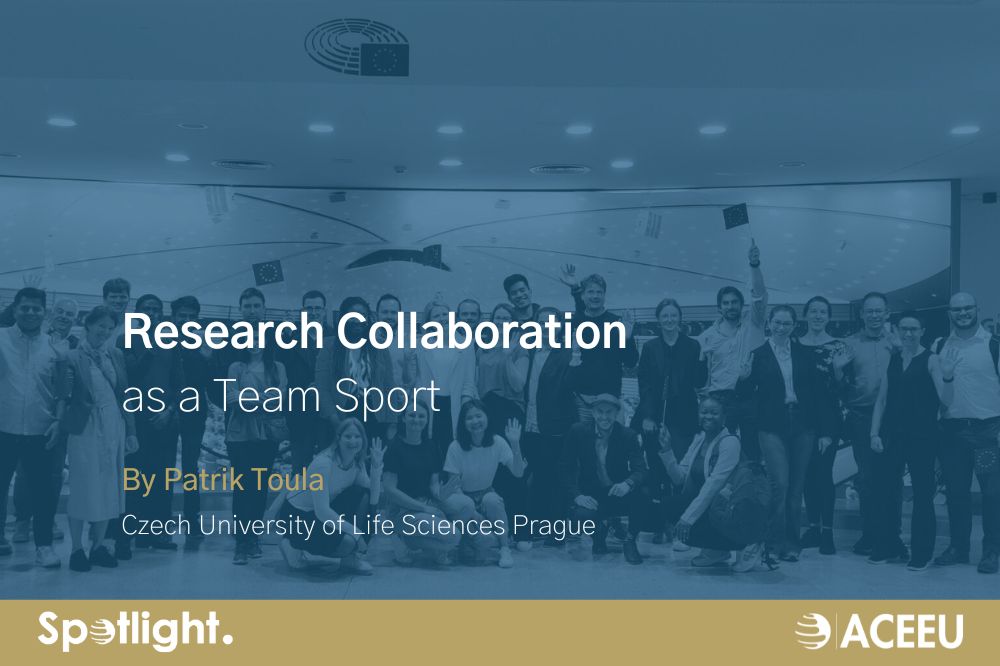
To give a few examples, one of our key activities, a training programme, is focused on the young generation of researchers. Since 2018, we have annually organised a highly popular and successful training programme called the Navigating Brussels with ELLS 2025: How can the EU help you develop your scientific career?. The three-day workshop provides final-year PhD candidates and early postdoctoral researchers with an intensive introduction to the European research and funding landscape. Held in Brussels, it brings together a diverse group of participants from multiple universities, creating a dynamic international environment. The course focuses on helping young researchers navigate the complex but opportunity-rich EU research ecosystem by developing practical proposal-writing skills, understanding evaluation criteria, and exploring broader European research policies. It also encourages participants to consider career paths both within and beyond academia while engaging in interactive activities that foster meaningful dialogue, peer learning, and lasting professional connections.
To keep the workshop as interactive as possible, and considering venue capacity in Brussels, budget constraints, and international travel, we are able to host no more than 30 participants each year. Demand, however, is typically at least five times higher than the number of available spots, with frequent requests to organise the course at least twice a year. Reaching only 30 participants annually may not seem like much, but it is the most effective way to deliver the workshop as best we can with the resources we have. With many alumni securing MSCA or ERC grants, working for the European Commission or diverse European organisations and networks, the course is a game-changer for early-career researchers.
Another greatly impactful activity is the staff exchanges focused on best (and worst) practice exchange and professional development, following the Staff Profile ACEEU standard. Years of regular digital collaboration meetings evolved into one-week gatherings held in various locations across Europe. Many ideas are brought in and many and implemented in practice (including new project proposals and management infrastructure). In the first two years of the exchange, we gathered at least 8 European universities, with a total of up to 20 people at each.
Additionally, RSO leads projects and offices, presents at conferences, and shares information on funding opportunities, new work programmes, and relevant rules and novelties amongst its members. With each member having different sources, by sharing them, we can ensure we are a slight step ahead of the competition. With tens of billions of euros in the game and a 15–18% average success rate, there is definitely competition!
As of today, RSO brings together nine European universities from nine different countries, along with Ghent University (Belgium) and Lincoln University (New Zealand). The core group consists of around 20 members. Since the representatives typically lead grant offices within their institutions, the overall impact extends much further, though it is difficult to quantify with precise numbers.
Step by Step, Train by Plane
Collaboration between research support professionals across institutions and borders can enhance professional development, improve research funding competitiveness, and strengthen institutional networks, which ultimately strengthens the potential for institutional impact. It all begins with a will to move the carriage forward. Top-down decisions made by institutions still originate from individuals who are not only responsible for deciding on a course of action but also for executing it and guiding others through the process. This is significant because it highlights that institutions act through people, and real change depends on the motivation, skills, and commitment of those individuals. By recognising the central role of people, we understand why leadership and personal initiative are essential for the successful implementation of any transnational collaboration. For those shaping universities, the lesson is clear: when leadership prioritises people, culture, and trust, collaboration becomes a strategic asset, one that strengthens ecosystem influence and delivers long-term impact, principles that are aligned with ACEEU’s vision for entrepreneurial and engaged universities.
By nature of life, people come and go. You cannot avoid that. But creating a strong network built on competence, trust, and a supportive, collaborative atmosphere helps retain members and attract like-minded, motivated individuals. Our Research Support Office network evolves step by step, meeting by meeting, event by event. And it will hold only as long as the interest and willingness of the people stand. Ultimately, it is the people-centred approach that makes the ELLS RSO unique. By focusing on individuals – their expertise, initiative, and collaboration – we have built a network that not only survives but thrives in the highly competitive landscape of global research funding.
.

.
Images courtesy of the author