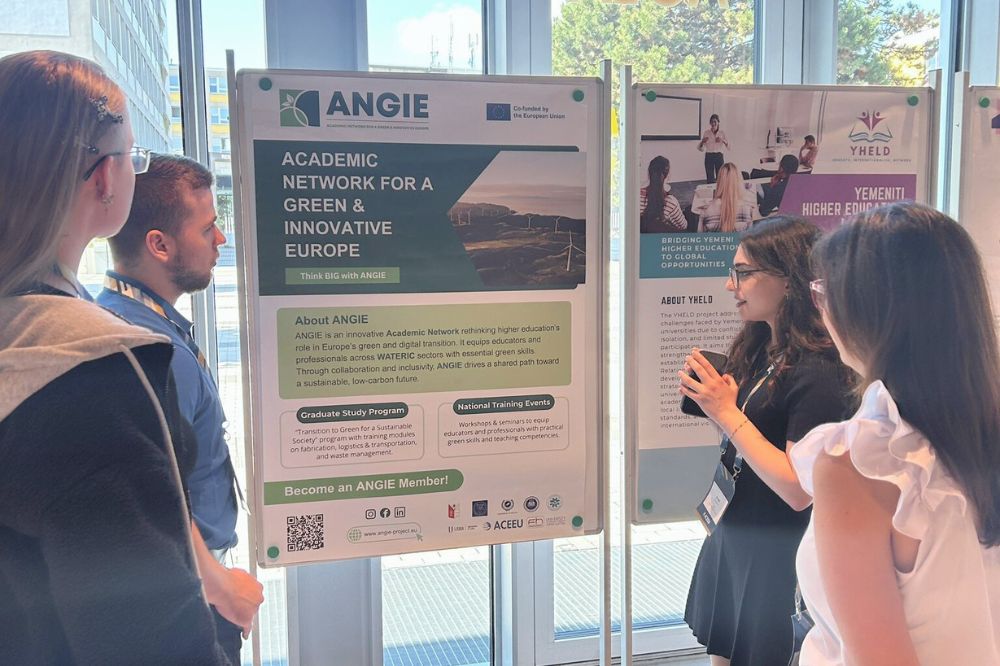
As industries, communities, and institutions confront rising environmental pressures, the ANGIE project continues to cultivate transdisciplinary dialogue on how education and interdisciplinary collaboration can accelerate Europe’s green transition. With ACEEU leading piloting and dissemination, the project brings together experts across the WATERIC sectors to discuss how knowledge, innovation, and skills development can support more sustainable systems.
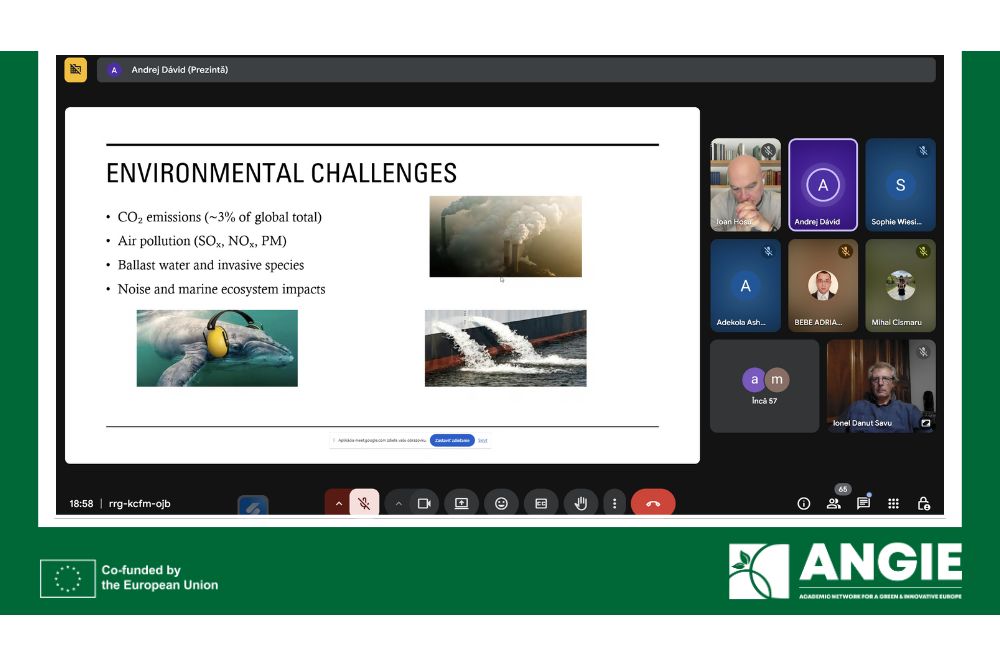
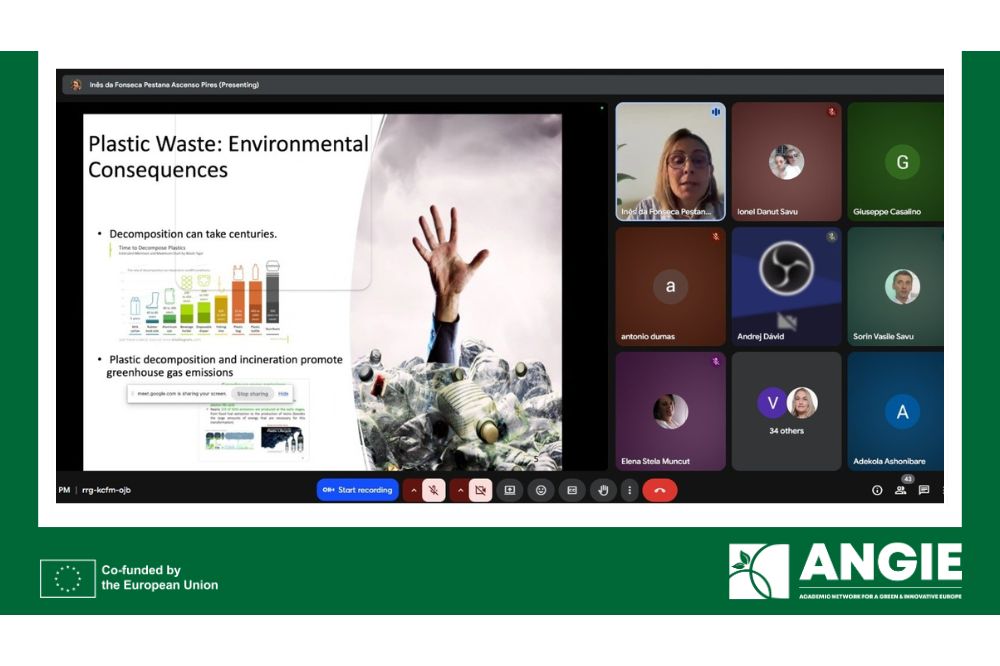
On 20 November 2025, over 60 participants joined the third webinar in the series, “Producing Sustainability Through Education: Waste Management and Environment.”
The webinar began with an overview of ANGIE and People, delivered by Prof. Danut Savu. His presentation highlighted how ANGIE strengthens cooperation among educators, specialists, and stakeholders by developing harmonised study programmes, promoting continuous training, and supporting transitions within the WATERIC sectors.
Next, Prof. Inês Pires discussed strategies for transitioning from linear production models to circular systems, emphasising smart design, sustainable manufacturing, bio-based materials, including the opportunities and limitations of current recycling technologies.
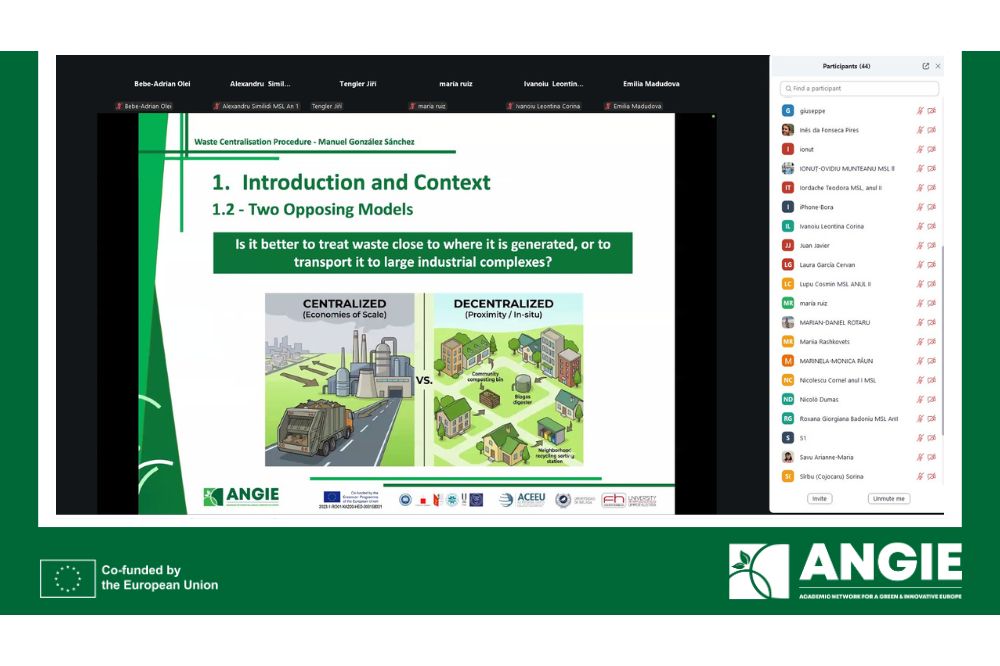
Following this, Prof. Manuel Gonzalez Sanchez shared insights into seasonal patterns of tourism waste and the different management approaches required across peak and off-peak periods. He explained how tourism-driven regions face unique sustainability challenges, and how tailored waste-management strategies can enhance both environmental protection and community wellbeing.
Closing the webinar, Prof. Ioan Hosu introduced participants to emerging trends in online environmental research, where digital tools, big data, and real-time monitoring are reshaping how environmental decisions are made. From satellite imaging and pollutant tracking to AI-driven circular-economy insights, he illustrated how digitalisation accelerates scientific collaboration and supports policy development, climate negotiations, and corporate sustainability strategies.
As the ANGIE project continues, ACEEU and the project partners remain dedicated to fostering meaningful exchange and strengthening the skills needed to support greener communities and industries.